
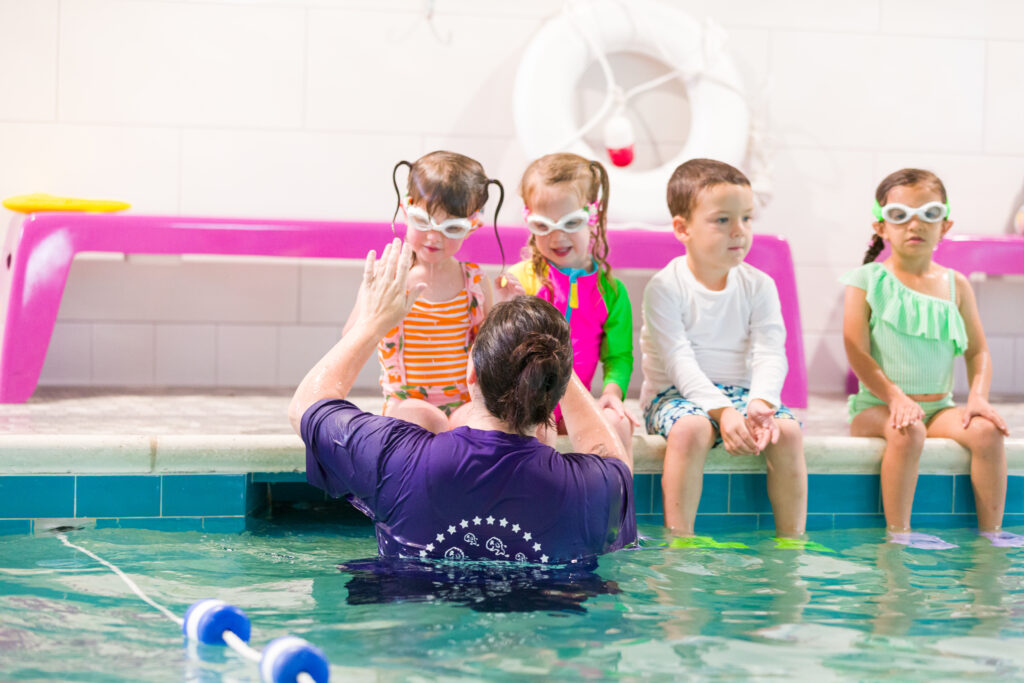
Why Fall Is the Best Time to Make Progress in the Water
Most families treat swim lessons as a summer activity, then wonder why their child is starting over every spring. The families who see the fastest, most lasting progress are the ones who keep swimming when everyone else stops. NJSwim was founded in 2001 in West Orange by Joe Oehme, who has spent more than two decades advocating for water safety legislation in New Jersey. His central argument has always been the same: drowning in New Jersey does not stop in September, and neither should swim lessons.
Water Safety Does Not Follow a School Calendar
Drowning is the leading cause of unintentional death in children ages 1 to 4, according to the CDC. In New Jersey, an average of 10 children under age 15 drown each year, while dozens more experience nonfatal drowning incidents. The New Jersey Department of Health recommends swimming lessons and basic water-safety instruction as important ways to help reduce drowning risk. Joe Oehme, from Emler Swim School, has worked directly with the New Jersey state legislature on water safety curriculum, and he sits on the board of the national nonprofit Stop Drowning Now, because he understands that the risk does not follow an academic calendar.
The water safety case for year-round instruction is straightforward: the skills that keep a child safe need to be practiced consistently enough to become automatic. A child who learned to float and return to the wall in July but stopped lessons in August has a less reliable version of those skills by November.
What Research Says About Swimming and School Readiness
The developmental benefits of swim lessons extend well beyond the pool. In the most comprehensive study ever conducted on early-years swimming, researchers from the Griffith Institute for Educational Research surveyed nearly 7,000 children under age five across Australia, New Zealand, and the United States over four years. The results were striking.
Young children who participated in regular swim lessons were 6 to 15 months ahead of non-swimmers in cognitive skills, problem solving, counting, language development, and ability to follow instructions. Specifically, 3 to 5 year old swimmers were 11 months ahead in verbal skills, 6.5 months ahead in math reasoning, and 17 months ahead in story recall. Lead researcher Professor Robyn Jorgensen noted that many of these advantages relate directly to the skills children need for the transition into preschool and kindergarten.
The physical mechanics of swimming explain why. Swim strokes require bilateral cross-patterning movements, where opposite arms and legs coordinate simultaneously. This type of movement activates both hemispheres of the brain at once and stimulates development in the corpus callosum, the network of nerve fibers connecting the brain’s two sides. Stronger cross-hemisphere communication supports memory formation, attention, and learning across subjects.
The Griffith study also found that young swimmers scored significantly better in visual-motor skills: cutting paper, coloring within lines, drawing shapes and lines. These are the fine motor skills children use every day in a classroom, and they develop faster in children who swim regularly than in those who do not.
Back to School Is the Right Time to Add Swim
The back-to-school transition creates conditions that make structured learning work. Children starting kindergarten, preschool, or a new grade in New Jersey are already in adjustment mode: meeting a new adult, showing up somewhere regularly, building skills in a structured setting. Adding swim lessons to that routine is easier in September than in June, when summer schedules compete with everything.
For children who took their first lessons over the summer at NJSwim, fall is when those early skills have the strongest chance of consolidating. The novelty of the pool has worn off. Separation anxiety from the first few lessons is behind them. Fall is when children stop adjusting to the environment and start building real capability in it. NJSwim’s ‘learn to float’ teaching philosophy means that foundational body position and breath control are already in place, and fall lessons can build directly on that base.
The Cost of the Summer-to-Fall Gap
Skill Regression Is Faster Than Most Parents Expect
A long break does not always preserve progress exactly where a child left it. Swimming skills are built through repetition, and developing skills can feel less familiar after months without practice. A child who was floating independently or performing Jump, Turn, Swim may return needing extra support to regain the same comfort, control and confidence.
When that happens, the first lessons back are spent rebuilding previously learned skills instead of advancing to new ones. Year-round lessons help children reinforce what they have learned, maintain confidence in the water and continue moving forward without a long interruption.
Confidence Regression Is Quieter but Just as Disruptive
Skill loss is visible. Confidence loss is harder to see, but it can take longer to rebuild. Children who were proud of what they could do in the pool, who finally jumped in independently or put their face in the water, can return after a long break and feel as though that capability is gone. The pool that felt familiar and safe in July can feel slightly foreign again in December. Consistent enrollment at NJSwim preserves that confidence without requiring it to be rebuilt from scratch each season.
How SwimSure Progress Compounds Over Time
NJSwim’s SwimSure curriculum is milestone-based, not calendar-based. Children advance when they have mastered the skills at their current level, not because a session ended. That structure works best with consistency. A child working toward a milestone in late August who continues into September often earns it by October. A child who stops in August and returns in May spends the early spring in recovery before resuming the pursuit.
A child who attends one lesson per week continuously for 12 months will progress further through the SwimSure levels than a child who takes 20 summer lessons and then stops. NJSwim also offers weekly swim clinics, a five-day intensive format across six New Jersey locations, for families who want to accelerate that timeline during the school year.
What Fall Lessons Look Like at NJSwim
NJSwim’s six New Jersey locations, including Brick, Florham Park, Lakeside/Landing, Manasquan, Sparta, and Turnersville, all feature heated indoor pools with top-tier filtration and UV-C light sanitation, running year-round. Class formats, SwimSure curriculum, instructor certifications, and lesson structure are the same in October as they are in July. There is no condensed fall schedule and no off-season version of an NJSwim lesson.
Morning, afternoon, and weekend time slots are available across all locations. NJSwim also offers weekly swim clinics and private lessons for families who need more scheduling flexibility or whose child benefits from one-on-one instruction during the school year.
Starting for the First Time This Fall
If your child has not had lessons yet, fall is an excellent time to begin. The back-to-school transition is already happening, and the Griffith Institute research is clear: the earlier children start consistent swim instruction, the greater the developmental advantage they carry into school. In New Jersey, where drowning is a year-round threat, starting in fall is as urgent as starting in June.
NJSwim’s free trial lesson is available at all six New Jersey locations. NJSwim’s Swim Level Assessment takes about a minute and places your child in the right SwimSure level based on current ability. Every new enrollee also receives a free skills evaluation by appointment and an in-water assessment at their first lesson.
Take the Swim Level Assessment.
Ready to make fall your child’s best swim season yet? Find an NJSwim location near you.
Is fall a good time to start swim lessons in New Jersey?
Fall is one of the best times to start. Children already in school routines are in structured learning mode, which makes adding a consistent weekly activity easier than during summer. NJSwim's six New Jersey locations all feature heated indoor pools running year-round. The SwimSure curriculum runs on the same format and instructor standards in September as in June.
Do swim skills carry over from summer into fall?
Yes, but only if lessons continue without a significant gap. Children who move directly from summer into fall lessons carry their momentum forward. Children who take a 2 to 3 month break often spend the first several fall lessons recovering skills they had already built, rather than advancing to new ones. New Jersey averages 10 child drowning deaths per year. Keeping lessons consistent through fall directly addresses that risk.
How do I balance swim lessons with school and fall activities in New Jersey?
One lesson per week integrates naturally into a school-year routine. NJSwim's six locations, including Brick, Florham Park, Landing, Manasquan, Sparta, and Turnersville, offer morning, afternoon, and weekend time slots to work around school and activity schedules. NJSwim also offers weekly swim clinics for families who want to build skills faster. One lesson per week is enough to maintain existing skills and continue progressing through the SwimSure levels.
Will my child catch a cold going from a warm pool to cold New Jersey fall weather?
No. Colds are caused by viruses, not temperature changes. There is no medical evidence that moving from a warm pool to cooler outdoor air causes illness. Children who swim year-round are not more susceptible to colds than those who do not. NJSwim's pools feature top-tier filtration and UV-C light sanitation and are maintained at a consistent warm temperature year-round. Toweling off and dressing promptly after lessons is all that is needed.
My child just finished summer lessons. Should we take a break before starting fall?
Continuing directly, without a break, is the most effective approach. Research on motor skill retention shows that meaningful skill fade in young children can begin within just a few weeks of stopping lessons. A 2 to 3 month gap typically costs a child 2 to 6 weeks of recovery time when lessons resume. Consistent enrollment is the individual family version of that commitment.
What level should my child be in for fall lessons at NJSwim?
If your child completed a summer session at NJSwim, their instructor will have noted their current level. Fall enrollment continues from where summer ended, with no reassessment needed. If you are enrolling for the first time this fall, NJSwim's Swim Level Assessment takes about a minute and places your child in the right SwimSure level. Every new enrollee also receives a free skills evaluation by appointment and an in-water assessment at their first lesson.

