
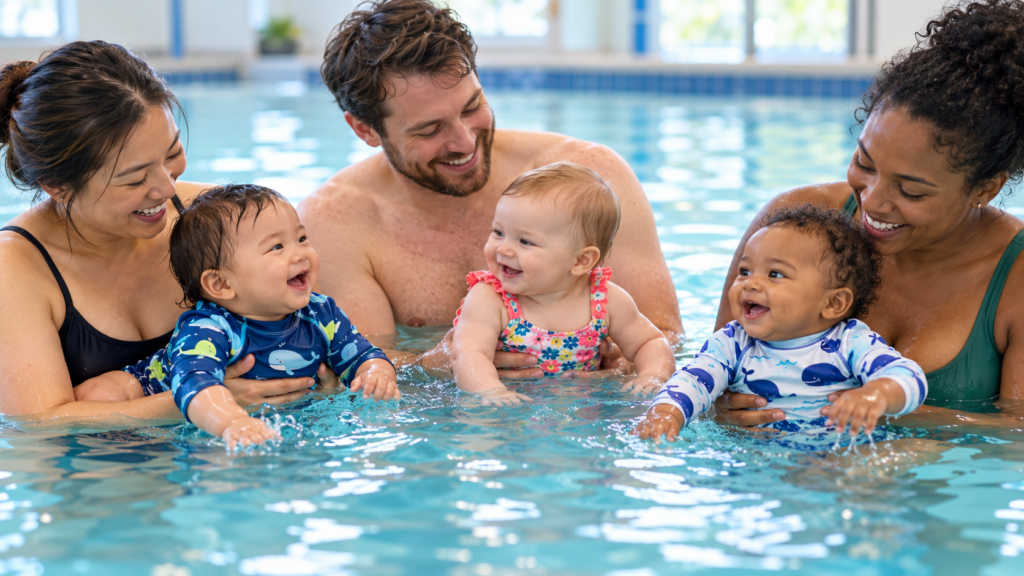
What do parents and babies learn in class?
Babies explore the water through supported play. Parents learn how to hold and guide their child during age-appropriate activities.
Do baby swim lessons lower drowning risk?
There is currently no evidence that classes for babies under 1 do so. Lessons for older children can become one part of a broader water safety plan.
What Do Parents and Babies Learn in Swim Class?
Parents often ask what a baby can learn in a swim lesson. It is a fair question, especially when your little one is too young to swim independently.
At NJSwim, an early parent and baby class is a shared introduction to the water. Your baby gets to explore a new setting with you close by. You get guidance on supporting them in the pool and a chance to enjoy the experience together.
Babies learn that the pool can be familiar
New places take time to get used to. In class, your baby can hear the songs, feel the water, look around, and participate when they are ready. Repeated visits give them opportunities to experience the pool with someone they know and trust.
That does not mean every baby will love every moment. Some prefer to watch before joining an activity. An encouraging first experience can be as simple as staying close to you while they take it all in.
Parents learn, too
You are an active part of the lesson. An instructor guides you through gentle activities and shows you how to hold and support your baby in the water. You can ask questions and learn what your child seems to enjoy.
Those skills can make you feel more comfortable bringing your little one to the pool. The class also offers focused time together, away from the ordinary rush of the day.
There is room to move and play
Babies may reach for a toy or move their arms and legs as you support them. The water offers sensations they do not experience in quite the same way on land.
Some research has examined whether baby swimming is associated with later motor abilities. A small study found differences in particular balance and grasping skills, but its authors called for stronger research. We cannot promise that a baby class improves sleep, increases concentration, or accelerates overall development. We can make room for movement, play, and connection.
Water comfort is not independent swimming
The American Academy of Pediatrics says there is no evidence that swim programs for babies under 1 reduce drowning risk. It also says parent and child water play can be a fun way to introduce an infant to the pool.
A baby always needs close, constant adult supervision around water, whether or not they have attended class. As your child grows, age-appropriate swim lessons can join supervision and other protections in your family’s water safety plan.
NJSwim’s Bathtime Babies class begins at 2 months with a parent or caregiver in the water. Explore NJSwim’s parent and baby lessons and find a New Jersey location near you.
Sources: American Academy of Pediatrics guidance on swim lessons; baby swimming and motor abilities study.

